
Le Corbusier.
Living with Modernity

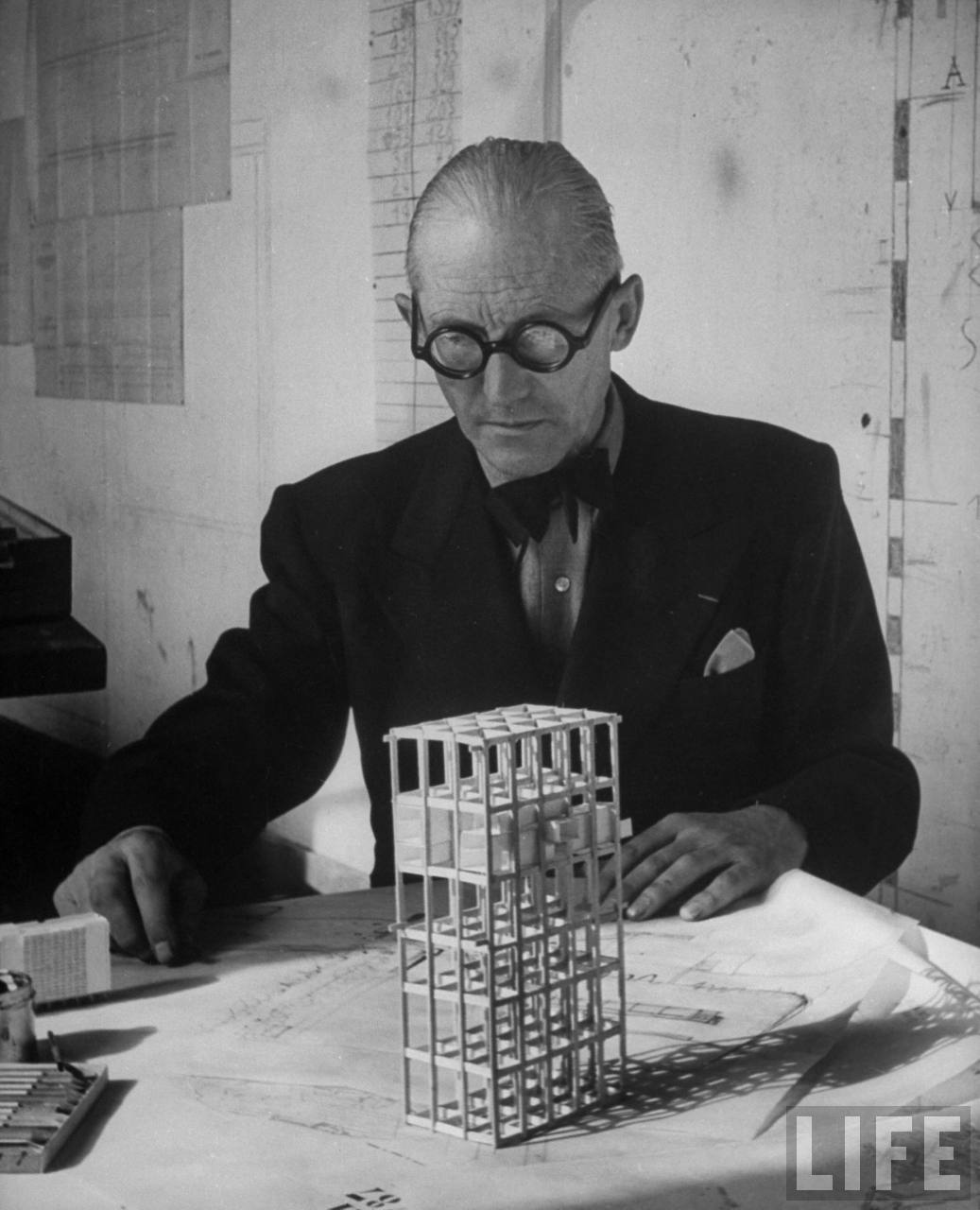
Le Corbusier, born Charles-Édouard Jeanneret on October 6, 1887, in La Chaux-de-Fonds, Switzerland, is a seminal figure in modern architecture and urban planning, known for pioneering innovative design philosophies that reshaped the built environment. His career, spanning several decades until his death in 1965, is marked by the introduction of key architectural principles, most notably the "Five Points of Architecture," which emphasize functionality, light, and human-centric design. Le Corbusier’s work not only revolutionized residential and civic buildings but also laid the groundwork for modern urbanism, advocating for structured city planning that promotes efficiency and quality of life in urban settings.
Among his most notable works are the Villa Savoye, the Unité d'Habitation, and the Capitol Complex in Chandigarh, India, each exemplifying his bold approach to design and social housing. His projects often reflect a desire to address societal issues through architecture, merging aesthetics with the practical needs of inhabitants. However, his vision was not without controversy. Critics have accused him of promoting an elitist and authoritarian approach to urban planning, as seen in some of his housing projects that have failed to foster community engagement. This criticism raises essential questions about the ethical implications of his designs and their social impact.
Le Corbusier's influence extends beyond his architectural innovations; he was also a prolific writer whose manifestos, such as "Vers une Architecture," argued for a new architectural language that harmonizes with the industrial age. His ideas continue to inspire contemporary architects while also provoking debates about the balance between modernist ideals and the needs of diverse populations in rapidly changing urban landscapes. His legacy remains complex, with ongoing discussions about the implications of his work for current architectural and urban planning practices.
Biography
Early Life and Education
Le Corbusier, born Charles-Édouard Jeanneret on October 6, 1887, in La Chaux-de-Fonds, Switzerland, emerged from a family deeply entrenched in the arts. His father was a watch engraver, while his mother was a music teacher, both of whom fostered his early interest in decorative arts. Le Corbusier's initial aspirations were to follow in his father's footsteps, but his experiences in art school and travels across Europe ignited a passion for architecture that would define his career.
At the age of 18, he collaborated with architect René Chapallaz to design his first building, the Villa Fallet. This wooden mountain chalet marked the beginning of his architectural journey.
Throughout his early years, Le Corbusier traveled extensively, encountering various architectural styles and modernist ideas that would shape his own design philosophy. His time spent working with notable architects such as Auguste Perret and Peter Behrens further solidified his commitment to architecture, particularly in the use of reinforced concrete

Influences and Collaborations
In 1920, Le Corbusier co-founded the avant-garde magazine L’Esprit nouveau with painter Amédée Ozenfant and poet Paul Dermée, a significant step in his engagement with contemporary artistic movements. His writings, particularly "Vers Une Architecture" published in 1923, laid out his vision for modern architecture, emphasizing functionality and the rediscovery of human needs in the design process.
Le Corbusier's collaborations during this period, particularly with Ozenfant, helped him refine his architectural style, which combined rationalism and humanism. This approach aimed to address societal issues through thoughtful design, making his work not just an aesthetic pursuit but a social action.

Major Works and Later Life
Throughout the 1920s and 1930s, Le Corbusier designed several iconic structures that would become symbols of modern architecture, including the Villa Savoye in Poissy (1928-31) and the Ozenfant House and Atelier in Paris (1922-24). These designs, characterized by their white volumes and adherence to his "five points" of architecture, marked a pivotal shift in architectural aesthetics and urban planning worldwide.
Despite facing disruptions during World War II, Le Corbusier continued to innovate and influence architecture until his passing in 1965. His legacy endures in his contributions to modernist design and urban planning, shaping the way people live and interact with their environments

Architectural Philosophy
Le Corbusier's architectural philosophy is characterized by a synthesis of functionalism and a deep understanding of human experience within built environments. Central to this philosophy is the Five Points of Architecture, a framework he developed to redefine how buildings are conceived and experienced. These principles emphasize clarity, openness, and functional order, integrating structure, light, and human life in a manner that promotes efficiency and harmony between form and function.
Human Experience and Environmental Connection
Le Corbusier prioritized how people interact with their environments, aiming to create spaces that enhance visual and physical comfort. Features such as natural lighting, open facades, and roof gardens were designed to support health and productivity, fostering a connection between the individual and their surrounding.
His approach reflects an industrial aesthetic that arose in the early twentieth century, emphasizing the need for architecture to embody the precision and efficiency of the machine age. Materials such as reinforced concrete, steel, and glass became emblematic of modern progress, reshaping architectural aesthetics into a language of simplicity and structural integrity

The Five Points of Architecture
The Five Points of Architecture are not merely aesthetic guidelines; they are functional solutions that articulate a vision of modern architecture.
These principles consist of
Pilotis (supports),
Free plans,
Free facades,
Ribbon windows,
Roof gardens.
Together, they encapsulate a philosophy that champions flexibility and adaptability in design, reflecting the changing lifestyles of the modern era.
Villa Savoye serves as a quintessential example, integrating these elements into a cohesive design that has influenced architectural education and practice globally
Structural and Spatial Innovation
Le Corbusier's work signifies a profound shift in architectural thinking, wherein buildings are treated as instruments of logic, science, and functionality. He argued that architecture should aspire to the same efficiencies found in engineering, allowing for a more rational approach to design. This focus on structural innovation is exemplified in projects like the Dom-Ino House, which laid the groundwork for open floor plans that are now commonplace in modern architecture
Evolution and Contemporary Relevance
The relevance of Le Corbusier's ideas persists in contemporary architecture, where modern architects adapt his principles to address challenges such as urban density and sustainability. Today, the integration of digital tools allows for enhanced spatial optimization, enabling architects to reinterpret and evolve his foundational concepts in innovative ways. The ongoing dialogue between tradition and innovation in architecture underscores the lasting impact of Le Corbusier's philosophy, affirming its significance in both theoretical and practical contexts.
Major Works
Le Corbusier, a pioneer of modern architecture, is renowned for his innovative designs that have significantly influenced urban planning and residential living. His major works encompass a variety of structures, from monumental government buildings to social housing projects, each embodying his architectural philosophies.
Capitol Complex, Chandigarh, India
One of Le Corbusier's most iconic projects is the Capitol Complex in Chandigarh, which includes the Palace of Assembly, the Secretariat, and the High Court. This monumental structure stretches 250 meters in length and rises eight stories high, constructed primarily of rough cast concrete and set against the backdrop of the Himalayan mountains. The design integrates Le Corbusier's Modernist theories on a grand scale, reflecting a vision of governance and civic architecture in post-colonial India.

Unité d'Habitation, Berlin, Germany
In response to the housing crisis in post-World War II Berlin, Le Corbusier designed the Unité d'Habitation, a high-rise social housing project featuring 530 apartments. Completed in 1959, this building served as a model of his "radiant city" concept, promoting better living conditions and community integration. The Unité was designed as a vertical village, equipped with amenities such as shops, schools, and recreational facilities, and continues to house residents today.

Notre-Dame-du-Haut, Ronchamp, France
Le Corbusier's Notre-Dame-du-Haut chapel, constructed on a former pilgrimage site that was destroyed during World War II, showcases a departure from his earlier functionalist style. The chapel features a striking billowing concrete roof supported by curvilinear walls, adorned with irregularly shaped windows that allow natural light to flood the interior. This design reflects his later philosophical shift towards expressive forms and spirituality in architecture.

Housing Unit, Marseille, France
Built between 1945 and 1952 during the post-war reconstruction period, the Unité d'Habitation in Marseille exemplifies Le Corbusier's vision of social housing. Often referred to as the "radiant city," this complex includes apartments designed to maximize natural light and livability, featuring double-glazed windows and communal spaces. It operates as a self-sufficient vertical community, capable of housing around 4,000 residents

Urban Planning Concepts
Le Corbusier's urban planning philosophies emphasize the importance of zoning and organized city structure. He envisioned cities divided into distinct areas for commerce, residence, and recreation, integrating monumental skyscrapers and extensive public transport systems. His designs for residential units, such as the "Unité," aimed to create vibrant urban environments that fostered community interaction and improved quality of life for inhabitants.
. Le Corbusier's legacy is characterized by a commitment to innovative design and urban living, reflecting his belief in the transformative power of architecture. His works continue to inspire architects and urban planners worldwide, illustrating the enduring relevance of his ideas in contemporary design.
Influence and Legacy
Le Corbusier's contributions to modern architecture and urban planning have had a profound and lasting influence on the field. As one of the leading figures of the modernist movement, he rejected the ornate and elaborate styles of the past in favor of simplicity, functionality, and innovative materials like steel and glass.
His architectural philosophy emphasized open spaces, clean lines, and the integration of structures with their environments, which reshaped how architects approached design.
Architectural Innovations
Urban Planning Vision
In urban planning, Le Corbusier's ideas were similarly transformative. His "Radiant City" plan envisioned cities characterized by organized skyscrapers, abundant green spaces, and efficient transportation networks, aiming to enhance the quality of urban life. Although some of his urban concepts have faced criticism for being overly strict and authoritarian, they nonetheless presented a visionary blueprint for future metropolitan environments.
His focus on creating "living machines" sought to promote a better quality of life, advocating for cities that were not just functional but also aesthetically pleasing and conducive to community living.

Collaborative Legacy
The collaborative spirit of Le Corbusier, alongside architects such as Pierre Jeanneret and Charlotte Perriand, resulted in a lasting legacy that continues to resonate in contemporary design.
Their joint efforts not only produced iconic buildings and furniture but also established principles of design that persist in modern architecture. The enduring appeal of their works, particularly in the collector's market, underscores the timeless nature of their contributions.
Continuing Relevance
Today, Le Corbusier's legacy is under active scrutiny, with a growing dialogue around how to balance bold architectural innovations with human-centric design. His work raises critical questions about integrating modernist ideals with contemporary needs, including climate resilience and cultural sensitivity.
As discussions about urbanism evolve, Le Corbusier's vision serves as both an inspiration and a cautionary tale, reminding architects and planners of the delicate balance required in shaping future cities.
Through his influential designs and writings, Le Corbusier's ideas continue to inspire architects and designers around the world, affirming his role as a pivotal figure in the narrative of modern architecture.
Criticism and Controversies
Le Corbusier, an influential figure in modern architecture, has been the subject of extensive criticism and controversy throughout his career and beyond. His urbanism and architectural philosophy are frequently met with backlash, often oversimplifying the complexities of his work. Critics accuse him of promoting an elitist approach to city planning, disregarding the needs and preferences of residents, which has been linked to the failures of various housing projects he influenced in the United States and Europe.
Humanism vs. Anti-Humanism
The controversy surrounding Le Corbusier extends to accusations of anti-humanism. Detractors point to his grand urban plans, claiming they prioritize abstraction over the lived experiences of individuals.
. However, proponents assert that his work was fundamentally human-centered, aiming to address societal issues through organized architectural forms. The Foundation holding Le Corbusier's moral rights emphasizes the importance of contextualizing his statements within a historical framework, arguing that misinterpretations often arise from out-of-context quotations.

Legacy of Modernism
Critics have labeled Le Corbusier's vision as an "elitist" ideology, which led to urban environments that failed to support social cohesion and community life.
The stark, austere aesthetics of his designs have been criticized as disregarding the fundamental social structures that shape human existence. This has been described as a form of "aesthetic indulgence," where modernist principles overshadow the realities of everyday life and community needs.
The ongoing debate surrounding Le Corbusier reveals the complexities of his legacy, raising essential questions about the interplay between architecture, politics, and social responsibility. While he aimed to redefine urban living, the consequences of his ideas continue to spark discussions about the ethical implications of architectural practice.
Historical Exhibitions
Le Corbusier - Between Architecture and Fine Art
This exhibition examines the intersection of Le Corbusier's architectural practice and his fine art contributions, providing insights into how his artistic vision shaped modern architecture and urbanism.
Sports and Community Development in Firminy
On June 24, 2023, a consultation event was held at the Maison de la Culture in Firminy, focusing on future developments around the Site Le Corbusier. This event gathered local residents, enthusiasts, and project management professionals to discuss enhancing the area's appeal to tourists.
Publications
Vers une Architecture
First published in 1923, "Vers une Architecture" is a pivotal work by Le Corbusier that served as a manifesto for modern architecture. The book argues for a new architectural language that embraces industrial aesthetics, which continues to influence architects and designers today
Exhibition Catalogues
Exhibitions featuring Le Corbusier often include comprehensive catalogues that provide insights into his works and the context of the exhibitions. These publications serve as valuable resources for understanding his impact on architecture and design, as well as the continuing relevance of his ideas in contemporary discussion.